How Chloride Shift Alters the Anion Gap
Understanding the Anion Gap?
The anion gap is a calculated value used to aid in evaluate serum electrolytes and evaluate acid-base balance. It estimates the difference between the main measured cations and anions in the blood, most often using sodium, chloride, and bicarbonate. In clinical practice, it helps clinicians identify whether there are unmeasured acids or other changes affecting the anion difference.
The standard anion gap formula is usually written as:
Anion gap = sodium - (chloride + bicarbonate)
Some versions incorporate potassium, but the simplified formula above is the most widely used in routine serum chemistry and is especially useful for quick bedside clinical interpretation. A normal reference range changes by laboratory method, which is why the exact number should always be read in context rather than in isolation.
The key idea is electroneutrality: the body keeps total positive and negative charges balanced. If one measured ion changes, another often shifts in the opposite direction to preserve balance. That is why the anion gap is not just a number; it shows underlying physiology and electrolyte balance.
What Is the Chloride Shift?
The chloride shift is an ion exchange mechanism that allows red blood cells carry carbon dioxide. As carbon dioxide passes into red blood cells, it is converted into bicarbonate. To maintain electrical balance, bicarbonate leaves of the cell while chloride passes in. This exchange aids efficient gas transport and helps preserve normal physiology.
This process is also sometimes described as a “chloride-bicarbonate exchange.” It is central to how the body handles CO2 during circulation and contributes to normal buffering. Because bicarbonate is involved in this transport, the chloride shift directly alters measured concentrations of bicarbonate concentration and chloride concentration, especially when reading lab values in blood gas analysis.
Although the chloride shift is a normal function of red blood cells, the term can also be used more broadly in acid-base discussions to describe situations where chloride rises as bicarbonate falls. In that setting, the shift becomes important for understanding hyperchloremic acidosis and shifts in the calculated gap.
How the chloride shift Alters Anion Gap Calculations
The anion gap formula helps make the effect of the chloride shift more straightforward to see. Since the formula subtracts both chloride and bicarbonate from sodium, any change that lowers bicarbonate and raises chloride can keep the calculated gap relatively stable. This pattern is important because it reflects electroneutrality rather than a large buildup of unmeasured anions.
This is the basic logic:
- If bicarbonate loss occurs, the anion gap calculation tends to rise only if unmeasured anions replace the lost bicarbonate.
- If chloride increase occurs at the same time bicarbonate falls, the calculated gap may remain normal.
- The net effect is often a preserved calculated gap despite clear evidence of metabolic acidosis.
This is why the chloride shift is so important in acid-base interpretation. A drop in bicarbonate does not automatically mean a high anion gap. If chloride rises enough to offset that bicarbonate loss, the result is often a normal calculated gap with a specific acid-base pattern.
For example, if sodium stays stable while bicarbonate decreases and chloride rises by a similar amount, the formula may produce little change in the calculated gap. That pattern suggests a normal anion gap metabolic acidosis rather than a high anion gap metabolic acidosis. In other words, the anion difference has not widened because chloride is filling the space left by bicarbonate.
This relationship is a practical reminder that the anion gap is a diagnostic aid, not a standalone diagnosis. It must be interpreted alongside symptoms, serum chemistry, and blood gas results.
Does the Chloride Shift Cause a Elevated or Normal Anion Gap?
In most cases, the chloride shift is associated with normal anion gap metabolic acidosis, not a high anion gap. This is because the rise in chloride replaces the bicarbonate that was lost, preserving the acid-base balance in the calculation. The AG formula Na Cl HCO3 patient may still have metabolic acidosis, but the anion gap stays normal because the retained negative charge is carried by chloride.
This pattern is commonly called elevated chloride-associated acidosis or hyperchloremic acidosis. In this situation, chloride goes up, bicarbonate goes down, and the calculated gap remains within the expected range. The blood is still acidotic, but the mechanism is different from conditions that create a high gap.
In contrast, a metabolic acidosis with a high anion gap occurs when unmeasured acids accumulate, such as lactate, ketones, or toxins. In those cases, bicarbonate falls, but chloride does not rise enough to replace it. The gap increases because extra unmeasured anions are present.
So the answer depends on the mechanism:
- Chloride shift with chloride replacement usually supports a normal anion gap.
- Accumulation of unmeasured acids usually produces a high anion gap.
Understanding that distinction improves acid-base analysis and helps separate a chloride-driven process from other forms of metabolic acidosis.
When to Rely on an Anion Gap Calculator
An Anion Gap Calculator is valuable any time you have serum values for serum sodium, serum chloride, and serum bicarbonate and require a fast check of the calculated gap. It is notably important when evaluating a patient with possible metabolic acidosis, because it can promptly show whether the numbers fit a chloride-driven pattern or a high-gap process.
You can use the calculator when:
- Assessing routine lab values in a chemistry panel
- Reviewing suspected acid-base disorders
- Contrasting findings with an arterial blood gas
- Determining whether hyperchloremia may explain the bicarbonate drop
Because the reference range differs by lab methodology, the calculator should be used as a tool rather than a strict rule. It is a diagnostic aid that guides clinical judgment. In practice, the best use is to combine the calculated gap with the overall serum chemistry picture, symptoms, and blood gas analysis.
The calculator is especially valuable when the clinical picture is unclear. For example, a patient may have low bicarbonate, but if chloride is also elevated, the anion gap may remain normal. That result points toward a normal gap process rather than a hidden accumulation of acids.
Frequent Medical Cases Where Chloride Shift Counts
A number of medical cases are closely related to chloride shift and related acid-base patterns. The most frequent are diarrhea, renal tubular acidosis, and saline infusion. Every one can reduce bicarbonate while elevating chloride, producing a normal anion gap acidosis profile.
With diarrhea, bicarbonate is lost from the gastrointestinal system. The body may preserve chloride to maintain electrical stability, leading to hyperchloremia and a non-gap result. This is a typical pattern of bicarbonate loss without extra unmeasured acids.
In renal tubular acidosis, the kidneys cannot to process acid and bicarbonate properly. Depending on the subtype, this anion gap clinical significance can cause a non-gap metabolic acidosis with elevated chloride. The main issue is reduced acid excretion or bicarbonate reabsorption, not necessarily an increase in unmeasured acids.
After substantial amounts of saline infusion, the chloride content can climb relative to bicarbonate. This may thin out bicarbonate and produce a pattern of hyperchloremic acidosis. The result is often a reduced bicarbonate concentration with a maintained calculated gap.
These situations show why acid-base disorders should be interpreted in context. The same low bicarbonate value can mean different things depending on whether chloride is increased, whether the gap is within normal limits, and whether there is indication of a high gap process.
How to Interpret Results In Relation to Blood Gas Values
The anion gap should never be interpreted alone. It is most useful when paired with an arterial blood gas and additional indicators from blood gas analysis. Together, these data help clarify whether a patient has true acidemia, compensation, or a mixed disorder.
Start with pH. If pH is low, the patient is acidemic. Next check pCO2 to see whether a respiratory process is contributing. Low pCO2 often reflects respiratory compensation for metabolic acidosis, while high pCO2 may indicate respiratory acidosis or a mixed disorder.
Then examine bicarbonate and the calculated gap. If bicarbonate is low and pH is low, the process is likely metabolic acidosis. If chloride is high at the same time, the anion gap may remain normal. That pattern supports a chloride-driven process rather than a high gap disorder.
Base excess is also informative. A negative base excess usually supports a metabolic acid load or bicarbonate deficit. If base excess is reduced while chloride is elevated, that finding fits with hyperchloremic metabolic acidosis. The overall picture may show metabolic compensation if pCO2 has fallen appropriately.
A useful interpretation approach is: pH first, pCO2 second, bicarbonate third, then calculate the gap and compare it with chloride. This sequence often reveals whether the problem is a chloride shift, bicarbonate loss, or a high-gap acid accumulation.
That stepwise method improves acid-base interpretation and reduces the chance of missing a mixed disturbance.
Frequently Asked Questions
What is the chloride shift in simple terms?
The chloride shift is the movement of chloride into red blood cells as bicarbonate leaves, letting the cells transport carbon dioxide efficiently. It is a routine exchange process that supports maintain electroneutrality and supports buffering.
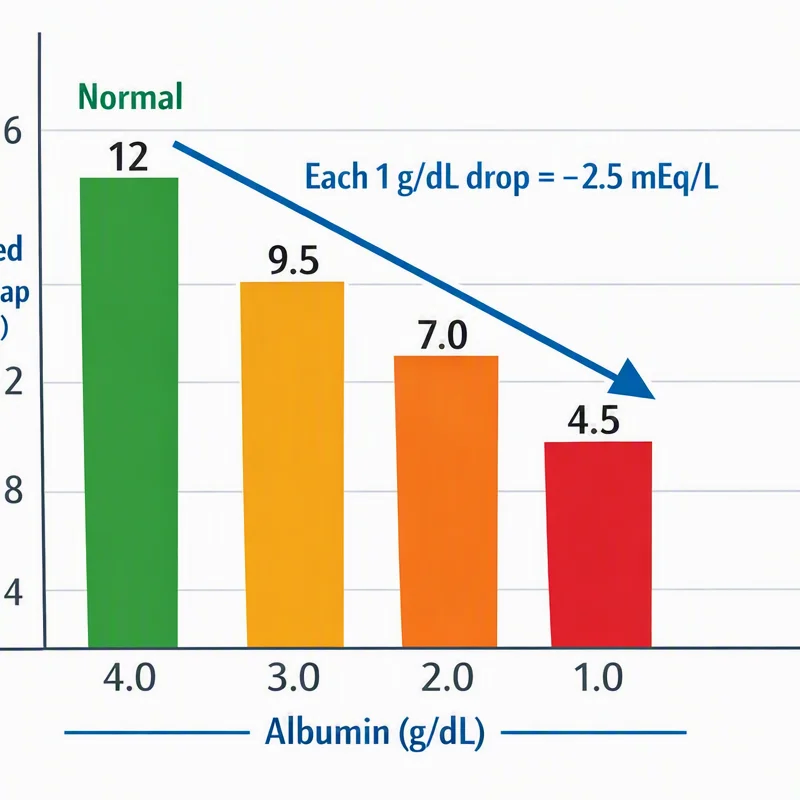
Does chloride shift increase or decrease the anion gap?
By itself, the chloride shift usually does not produce a high anion gap. When chloride rises as bicarbonate falls, the calculated gap often remains normal. That is why this pattern is commonly associated with normal anion gap metabolic acidosis or hyperchloremia.
Why does bicarbonate drop when chloride rises?
Bicarbonate can drop when the body expels base or when bicarbonate is exchanged for chloride to preserve electroneutrality. In the blood, this often means a lower bicarbonate level paired with a higher chloride level. The result is a preserved calculated gap even though metabolic acidosis may still be present.
Can a normal anion gap still mean acidosis?
Yes. A normal anion gap can still occur in acidosis, especially in normal anion gap metabolic acidosis. In that case, bicarbonate is reduced, but chloride rises enough to keep the calculated gap within range. This is common in diarrhea, renal tubular acidosis, and after saline infusion.
When should I use an Anion Gap Calculator?
Use an Anion Gap Calculator whenever you have serum sodium, serum chloride, and serum bicarbonate and want to rapidly assess the anion gap. It is especially helpful when evaluating suspected acid-base problems, comparing results with an arterial blood gas, or deciding whether the pattern matches a chloride-driven disorder or a high anion gap metabolic acidosis.