How to Understand the Anion Gap in DKA
How does one define the anion gap and why does it matter in DKA?
The anion gap is a straightforward laboratory calculation that helps clinicians identify hidden acids in the blood. In diabetic ketoacidosis, or DKA, it is one of the most important clues for recognizing high anion gap metabolic acidosis, a form of metabolic acidosis caused by acid accumulation from ketones.
View the anion gap as a way to estimate what the basic electrolyte panel does not directly measure. The body maintains acid-base balance through tight control of charged particles in the blood. When acid production increases, especially from ketone production, the balance shifts and the calculated gap rises. That rise becomes a diagnostic marker of ongoing metabolic derangement.
This is why an anion gap calculator is so useful in clinical assessment. It offers a quick check on whether the lab pattern fits DKA and whether treatment is working. The number itself does not diagnose the condition alone, but it helps connect the dots between the electrolyte panel, the level of blood glucose, the degree of acidosis, and the presence of beta-hydroxybutyrate.
In DKA, the anion gap matters for two main reasons:
- It helps confirm that the acidosis is due to unmeasured acids, especially ketones.
- It helps track response to treatment, especially during insulin therapy and fluid resuscitation.
Because DKA can be severe and dynamic, the anion gap is part of both diagnosis and monitoring. It reflects the balance between acid generation, buffering, and clearance, and it can change quickly as treatment begins.
How do you calculate the anion gap calculated
The typical anion gap calculation uses three key lab values: sodium, chloride, and bicarbonate. The usual formula is:
Anion gap = serum sodium - (serum chloride + serum bicarbonate)
Many clinicians use the values reported on the basic metabolic panel or metabolic panel. The calculation is easy to perform, but interpretation depends on the complete clinical picture. The serum sodium reflects the primary measured cation, https://anion-gap-reader143.image-perth.org/how-to-work-with-an-anion-gap-calculator-for-blood-gas-analysis while serum chloride and serum bicarbonate make up two major measured anions. The gap estimates hidden anions such as ketone-related acids, lactate, and other organic acids.
A standard reference range varies by laboratory method, but many use a range around 8 to 12 mEq/L without correction for albumin. Some systems report a slightly different range depending on analyzer technique. That is why it is important to read the result in context rather than relying on a single cutoff.
When using an anion gap calculator, it helps to follow these steps:
- Input the current sodium, chloride, and bicarbonate values.
- Compare the result with the lab’s reference range.
- Determine whether the pattern supports high anion gap metabolic acidosis.
- Identify concurrent abnormalities that could affect interpretation, such as low albumin or mixed disorders.
The calculation can also be adjusted into a corrected anion gap when albumin is abnormal. This is important because low albumin decreases the measured gap and can hide the severity of acidosis.
What anion gap values suggest DKA?
In DKA, a high anion gap usually indicates build-up of ketoacids. These acids are not directly measured on standard chemistry tests, but they use up bicarbonate as buffering occurs, reducing bicarbonate and increasing the gap upward. The result is the classic pattern of high anion gap metabolic acidosis.
Although there is no single universal cutoff for DKA, a clearly elevated gap in the setting of hyperglycemia, ketosis, and acidosis strongly supports the diagnosis. A normal anion gap does not exclude DKA in all cases, especially if the patient has already received treatment, if chloride has risen during saline resuscitation, or if the acid-base picture is mixed.
Here is the practical interpretation:
- High anion gap: supports ketoacid accumulation and active DKA.
- Normal anion gap: may reflect resolution, an alternative diagnosis, or a mixed picture.
- Rising gap: indicates worsening acid accumulation or incomplete treatment response.
The presence of ketones is essential for interpretation. A high gap with ketosis and low bicarbonate strongly points to DKA. However, ketone testing should ideally include beta-hydroxybutyrate, since it is the dominant ketone in DKA and often rises earlier and more accurately than urine ketones. In clinical practice, the anion gap and ketone burden usually move together, but not always at the same speed.
It is also helpful to remember that DKA is more than just a number. The overall severity depends on the full picture: mental status, dehydration, electrolyte imbalance, blood gas values, and hemodynamic stability. The gap is a diagnostic clue, not the entire diagnosis.
How do you interpret anion gap shifts during DKA treatment?
During treatment, the anion gap is one of the strongest indicators of response to therapy. As insulin therapy inhibits lipolysis and reduces ketone production, and as fluid resuscitation enhances perfusion and renal clearance, the acid load decreases. That should lead to anion gap closure.
Early in therapy, glucose may fall before the gap fully closes. That is why blood glucose alone should not be used as the sole measure of recovery. A patient can have improved glucose levels but ongoing ketosis and persistent metabolic acidosis. This is a common point of laboratory interpretation in DKA.
In general, trends matter more than a single value. You want to see:
- Lowering anion gap over time
- Higher bicarbonate
- Falling beta-hydroxybutyrate
- Improving acid-base balance on blood gas testing
If the gap is not closing as expected, consider ongoing acid generation, inadequate insulin delivery, persistent dehydration, renal impairment, or another cause of metabolic derangement. A patient may also have a changing chloride level after saline administration, which can affect the appearance of acidosis even as ketoacidosis improves.
The concept of anion gap closure is especially important because it helps determine when DKA treatment can transition from intensive management to maintenance therapy. Clinicians often look for closure together with clinical improvement and ketone reduction rather than relying on glucose normalization alone.
In some cases, a corrected anion gap is more useful than the uncorrected value during treatment. This is particularly true when albumin is low or when other acid-base processes are present. Proper interpretation prevents premature stopping of insulin and avoids missing persistent ketosis.
What other lab values help verify DKA?
The anion gap is important, but it should consistently be interpreted with supporting labs. A complete workup usually includes blood glucose, beta-hydroxybutyrate, and a venous blood gas. In some situations, an arterial blood gas may also be used, but venous testing is often sufficient for evaluating pH and bicarbonate trends.
These tests help answer separate questions:
- Blood glucose: indicates the severity of hyperglycemia, though DKA can occasionally occur with less dramatic elevations.
- Beta-hydroxybutyrate: demonstrates ketosis and shows the main ketone responsible for acidosis.
- Venous blood gas: evaluates pH and ventilatory compensation.
- Arterial blood gas: may be helpful when oxygenation or more detailed acid-base analysis is needed.
The serum chemistry also is important. Bicarbonate is typically low in DKA because it is consumed buffering acid. Sodium may appear low due to dilutional effects from hyperglycemia, and chloride may rise during treatment, especially after large volumes of normal saline. Those shifts can change the appearance of the acid-base disorder even when the underlying ketoacidosis is improving.
Useful confirmation often comes from the combination of findings rather than one isolated result:
- High blood glucose
- Elevated beta-hydroxybutyrate
- Low bicarbonate
- Low pH on venous blood gas
- Elevated anion gap
This combined approach increases diagnostic confidence and helps separate DKA from other causes of electrolyte imbalance and acidosis.
When can the anion gap be misleading in DKA?
The anion gap is helpful, but it can be unreliable in several common situations. One major factor is albumin. Because albumin is a negatively charged protein, low albumin lowers the measured anion gap. That means a patient with significant acidosis can have a deceptively normal gap unless the value is adjusted. This is why a corrected anion gap is often more useful.
Another challenge is mixed acid-base disorders. A patient with DKA may also have vomiting, respiratory changes, renal dysfunction, or another acid-base process that alters the final lab pattern. The anion gap may not fully reveal these overlapping disturbances. For example, metabolic alkalosis from vomiting can partially offset acidosis and make the bicarbonate look less abnormal than expected.
The delta gap is helpful in these cases. It helps evaluate the rise in anion gap with the fall in bicarbonate to identify whether there is a pure high anion gap acidosis or a mixed disorder. When the delta gap suggests an additional metabolic process, the full acid-base interpretation becomes harder to interpret.
An osmolar gap can also be relevant if another toxic ingestion or unusual osmole is suspected. While not part of routine DKA evaluation, it may be important when the presentation does not fit the expected pattern or when the metabolic derangement seems disproportionate. In other words, not every high anion gap acidosis is DKA, and not every DKA case behaves in a textbook way.
Other reasons the anion gap can mislead include:
- Marked chloride shifts after resuscitation fluids
- Low albumin masking the true gap
- Concurrent lactic acidosis
- Recovery phase after partial treatment
- Laboratory variation in the reference range
That is why laboratory interpretation should always be paired with clinical assessment. Review symptoms, exam findings, hydration status, glucose trends, ketone levels, and blood gas results in combination. The gap is a powerful tool, but only when used as part of the larger diagnostic picture.
FAQ: Common FAQs about anion gap in DKA
What is the anion gap in DKA?
In DKA, the anion gap is a computed lab value that often rises because ketoacids accumulate in the blood. It helps identify high anion gap metabolic acidosis and backs the diagnosis of diabetic ketoacidosis when paired with reduced bicarbonate, ketosis, and elevated blood glucose.
How elevated is the anion gap usually in diabetic ketoacidosis?
The anion gap is typically higher than the lab’s normal reference range in DKA, but the exact number changes by patient and laboratory method. A obviously elevated gap with low bicarbonate and elevated beta-hydroxybutyrate is more useful than a single cutoff. Severity depends on the full clinical picture and the degree of metabolic acidosis.
Is DKA possible with a normal anion gap?
It can. DKA can sometimes occur with a normal anion gap, especially after treatment has started, when chloride rises during fluid resuscitation, or when mixed acid-base disorders are present. Low albumin can also obscure the true gap. In these situations, the corrected anion gap, ketones, and blood gas values become particularly important.
How can you tell when DKA has resolved based on the anion gap?
DKA is generally considered resolved when the anion gap returns to baseline, bicarbonate improves, ketones fall, and the patient is improving clinically. Blood glucose alone is not enough. A closing anion gap suggests that acid accumulation is subsiding, but it should be interpreted alongside beta-hydroxybutyrate, venous blood gas results, and overall treatment response.
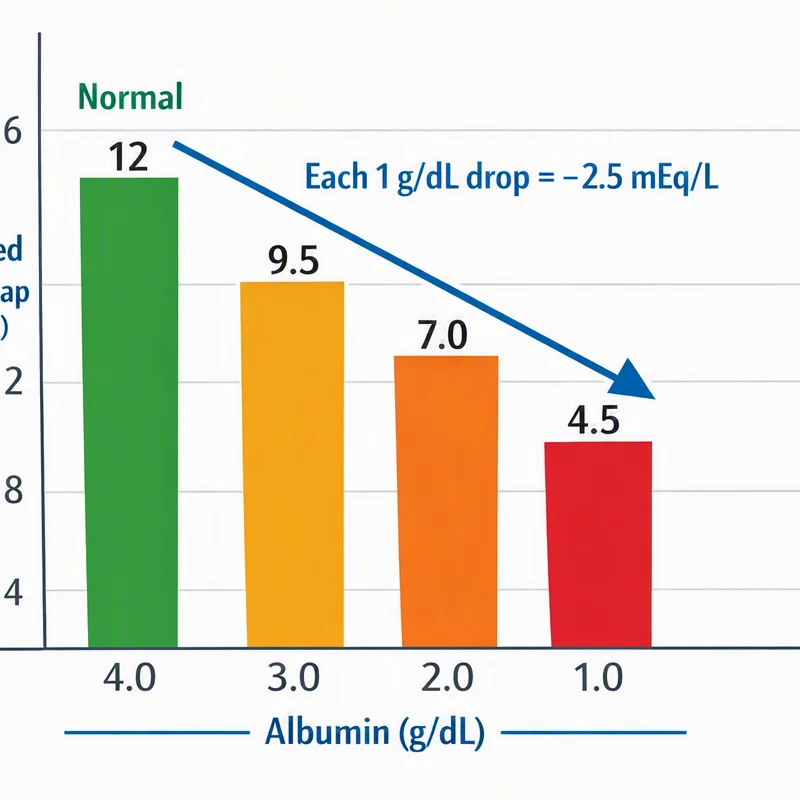
Why can albumin affect anion gap interpretation in DKA?
Albumin is a major unmeasured anion. When albumin is low, the measured anion gap may look falsely normal or only mildly elevated even when significant acidosis is present. That is why clinicians may use a corrected anion gap in DKA to more accurately assess the true acid burden and avoid missing ongoing ketoacidosis.